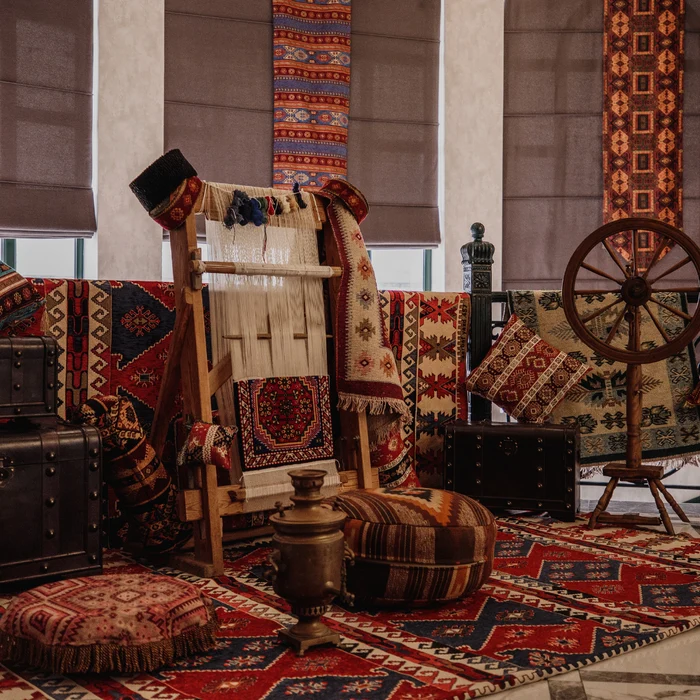
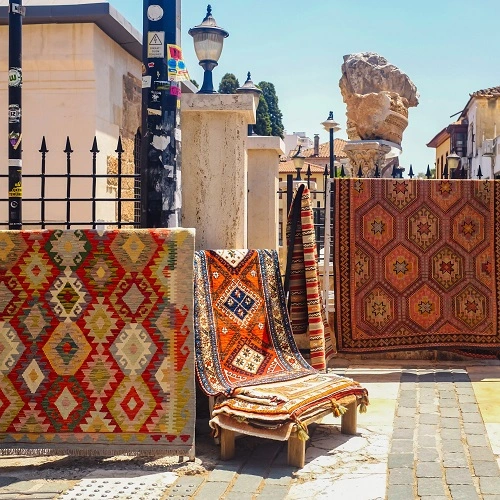
Long before they appeared in modern homes, kilims were among the most practical objects a family could own. They were floor coverings, wall hangings, door curtains, saddle bags and dowry pieces — woven by hand and carried from camp to camp.
Woven for life on the move
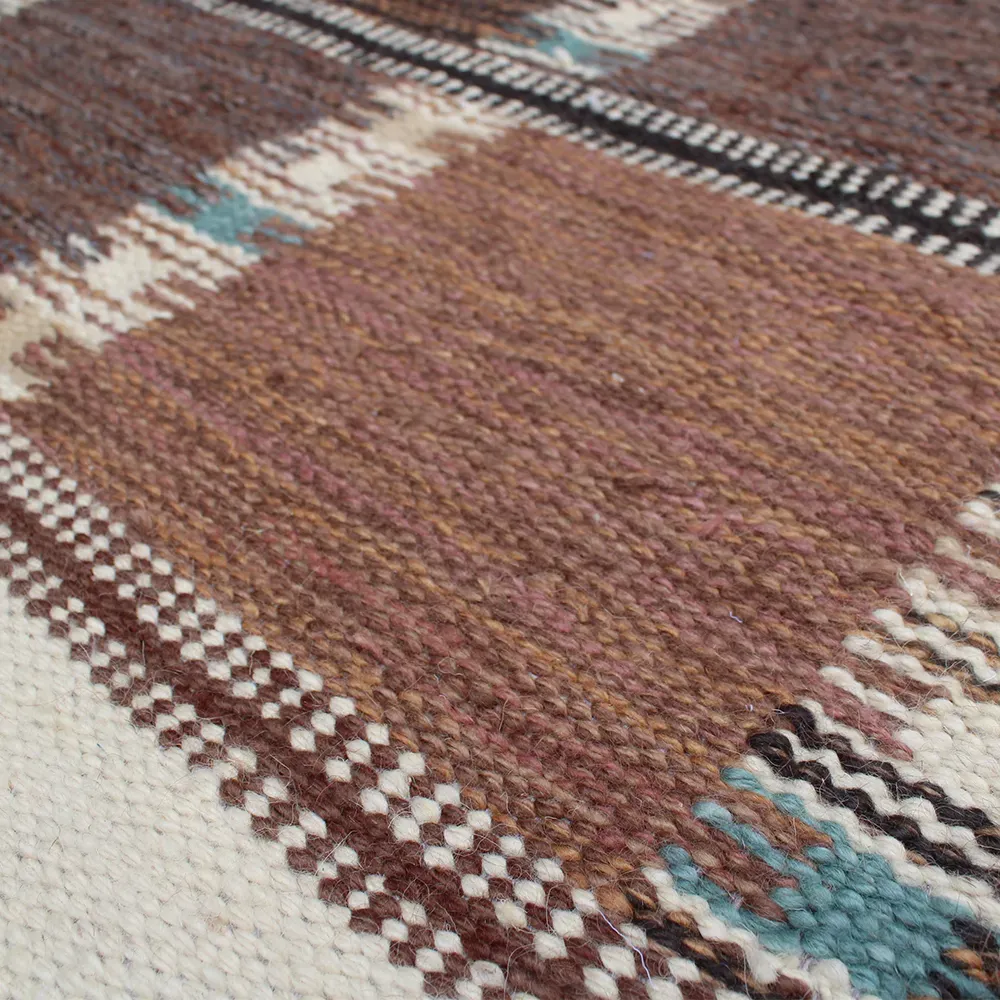
Kilims are thought to have been woven across Anatolia, the Caucasus, Central Asia and the wider region for well over a thousand years. Their flat weave made them light and easy to fold — perfect for nomadic and village communities who needed textiles that could travel.
Most were woven by women, using wool from their own flocks and dyes made from plants, roots and insects: madder for reds, indigo for blues, and weld or pomegranate rind for yellows.
A language of symbols
Every region developed its own motifs, passed down through families. Many carry meaning:
- The elibelinde (hands on hips) — a symbol of motherhood and fertility.
- The running water border — life, renewal and continuity.
- The eye — protection against bad luck and the evil eye.
- The tree of life — a bridge between earth and heaven.
From the tent to the living room
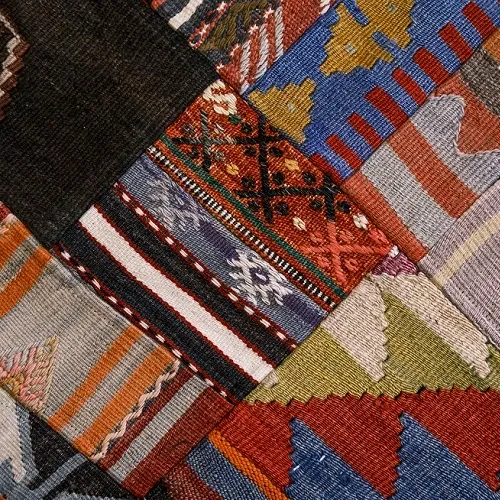
Today, kilims are prized for exactly the qualities that made them useful centuries ago: they’re durable, versatile and full of character. Old pieces are often patched together into new patchwork kilims, giving worn textiles a second life.
Every kilim in our gallery has its own story. Ask us where a piece was woven — we’re always happy to share what we know.
Need help choosing a rug?
Message our team on WhatsApp for sizes, colours and advice.